01 / 04Brands, creators & commerce
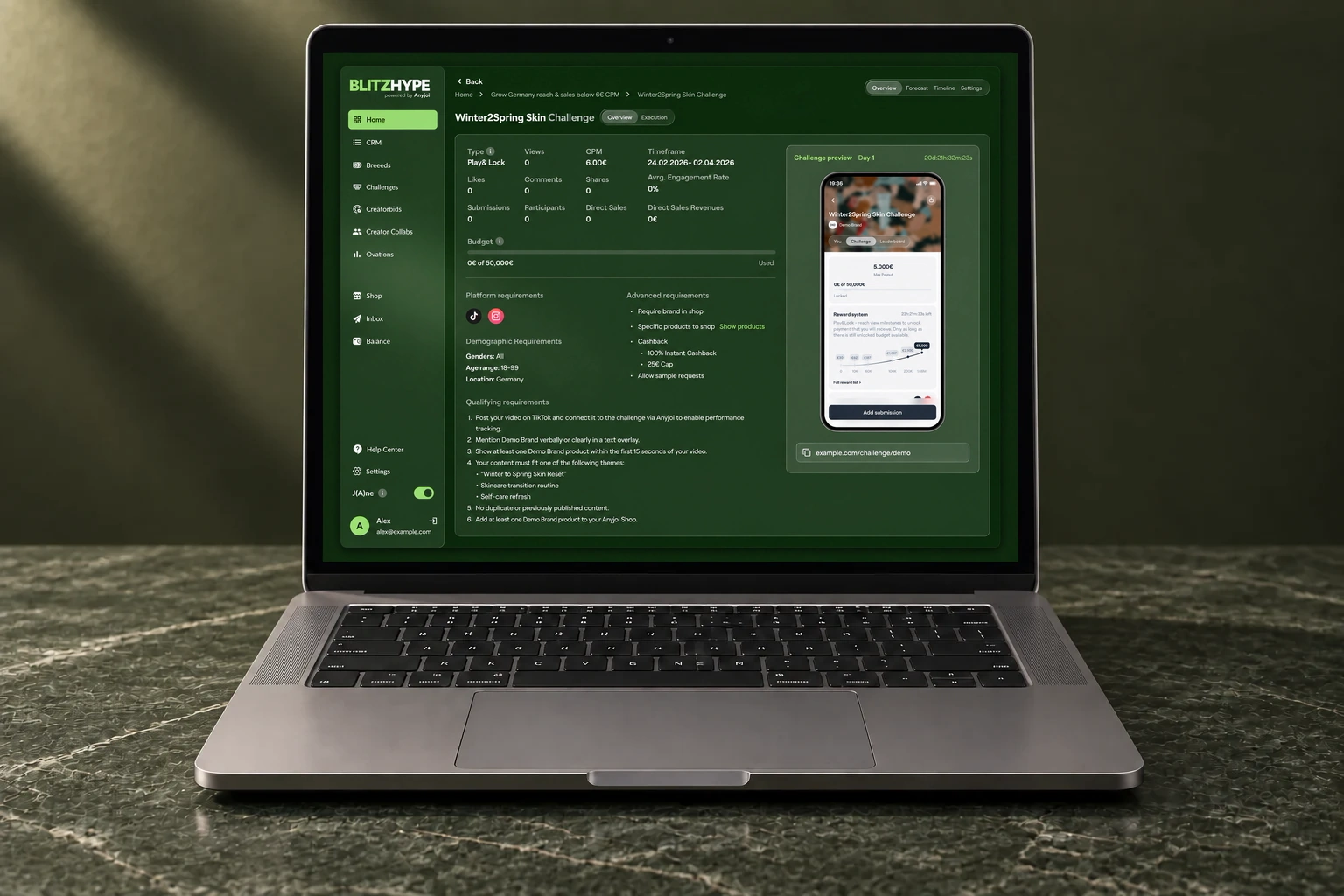
Blitzhype
Building an always‑on OS for Creator Marketing & Commerce.
Work · Sören Creutzburg
The ventures below are some of the ways I bring that vision into the world. I work across strategy, product, design and code.

Building an always‑on OS for Creator Marketing & Commerce.
From creators and entertainment to a creator commerce superapp.
Anime, manga, artists, cosplay and events in one fan world.

Investor relationships, updates and data rooms in one workspace.

The years before
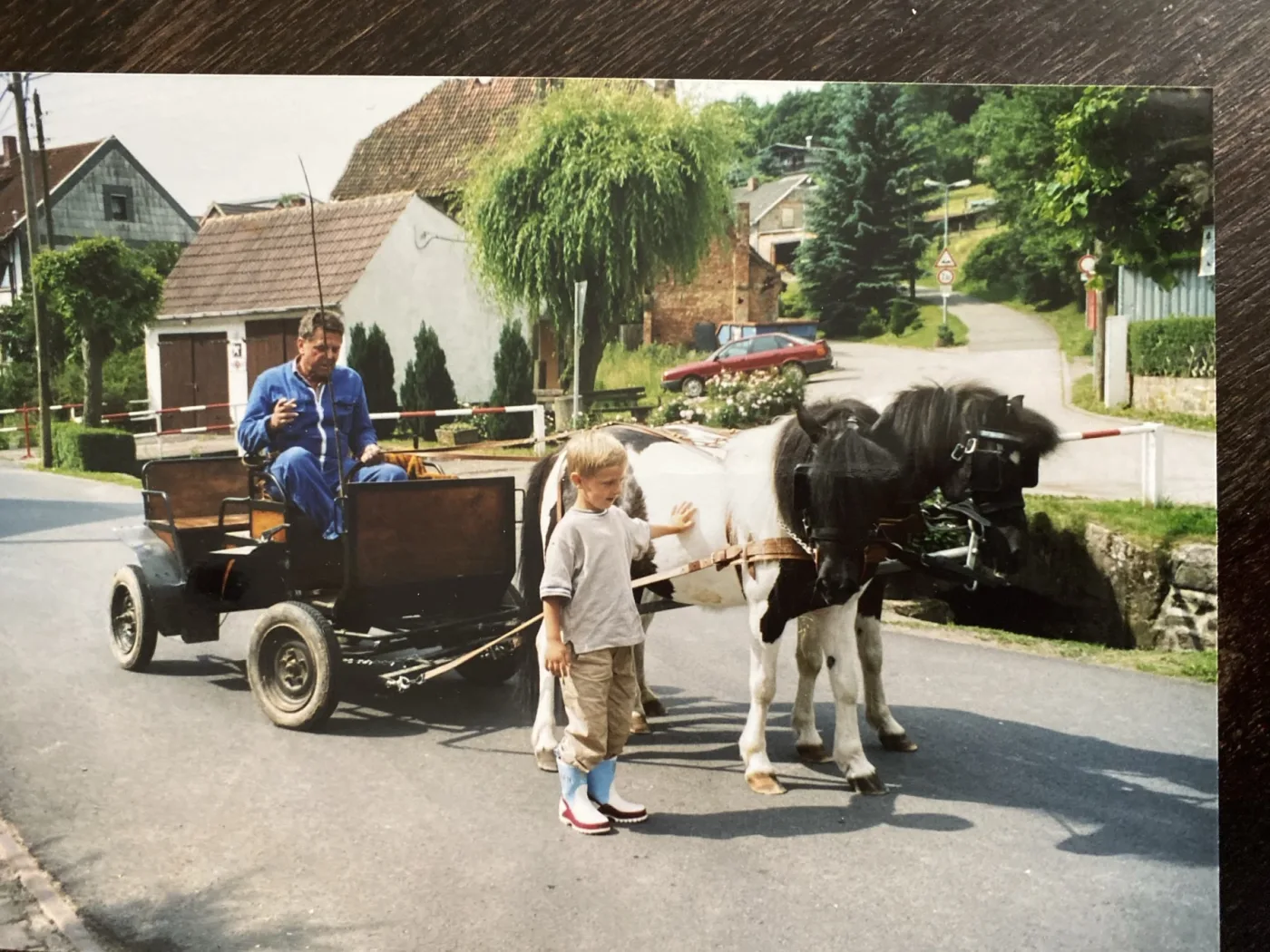
At twelve, I took C++ and Objective-C courses at the Volkshochschule. Communities, early client work, a UX mentor and companies followed.
Before the agency
Code, online communities, a school business and early product ideas taught me different parts of the same job: making things work with people.
At twelve, I took both courses. After that, I taught myself web development and product design through my own projects.
I founded and led the clan. It was my first experience of building a team around something people chose to spend time on.
A dispute over selling sweets led to a supervised café and eco-print shop I ran with friends. I also began building websites for others.
I helped administer both groups. Keeping a large developer community useful was a different kind of product work.
From sixteen, I learned from a senior UX lead who worked at Airbnb and later Facebook/Meta. It was an informal mentorship that lasted several years.
I began turning the social commerce idea into a product and prototype while taking on more web work for other people.
What came next
After CrowdClub, I put more time into client work. My freelance practice gradually became an agency.
The agency yearsIn parallel
The agency years
What started as freelance development grew into an agency. Some projects came directly, others through larger consultancies.
The work
I worked across research, design, engineering and marketing, learning how the parts of a business fit together.
Across industries
Genius On Demand in numbers
Selected project work
Agency & consultancy partnersAKQA · Accenture
Alongside the agency
I co-founded Superjoi to help creators and their fans fund and shape what should be made next. Over time, my own ventures became my focus.
The Superjoi storyPast work
A social-commerce prototype combining social interaction with shopping.
I built Hygienika and successfully exited it when further licensing deals no longer justified the opportunity cost.
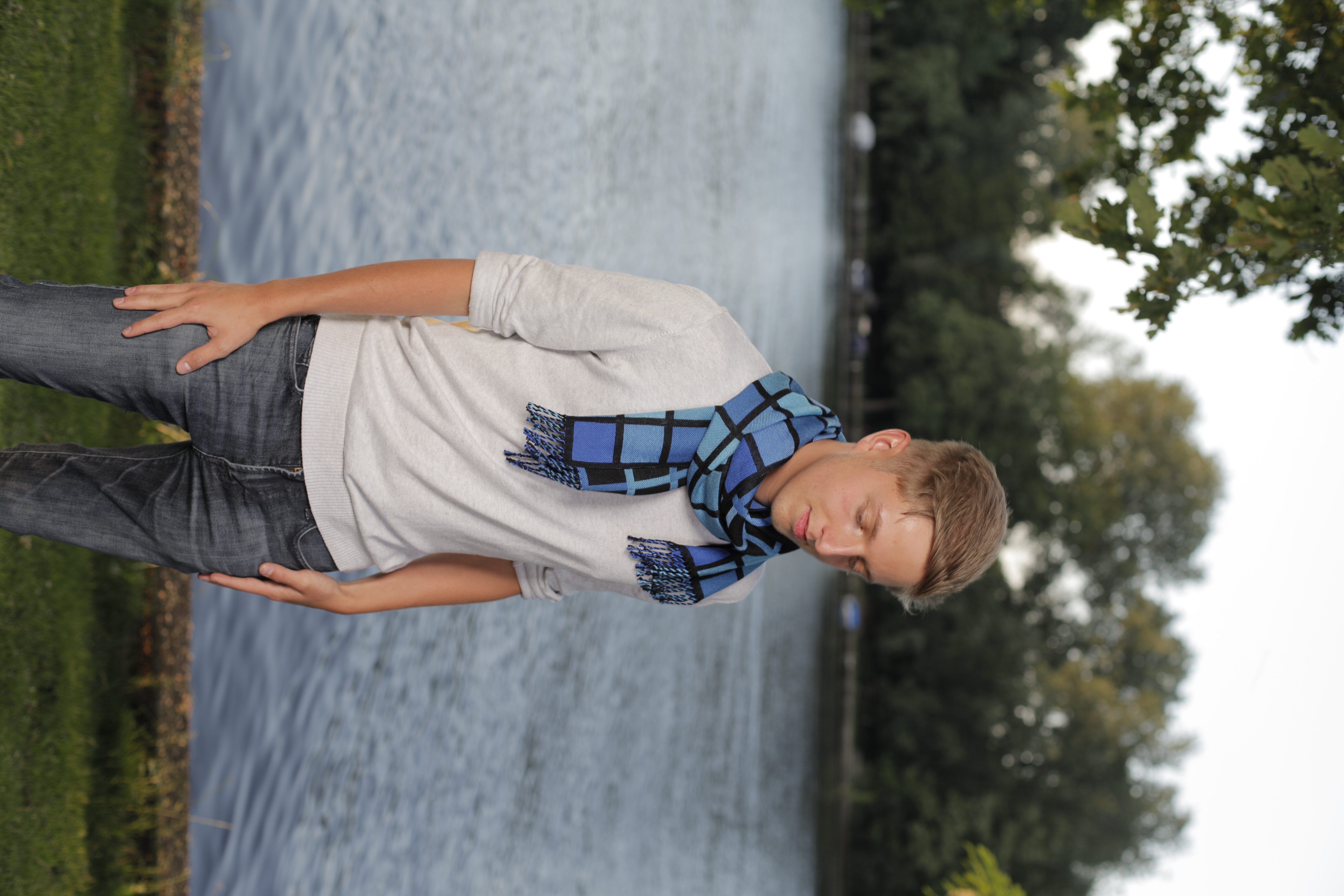
With Lífve Fashion, I explored sustainable fashion through handcrafted scarves. I sold six for an average of €400 each, but making them by hand was extremely costly. After three months, I stopped to put my time and resources into other work.
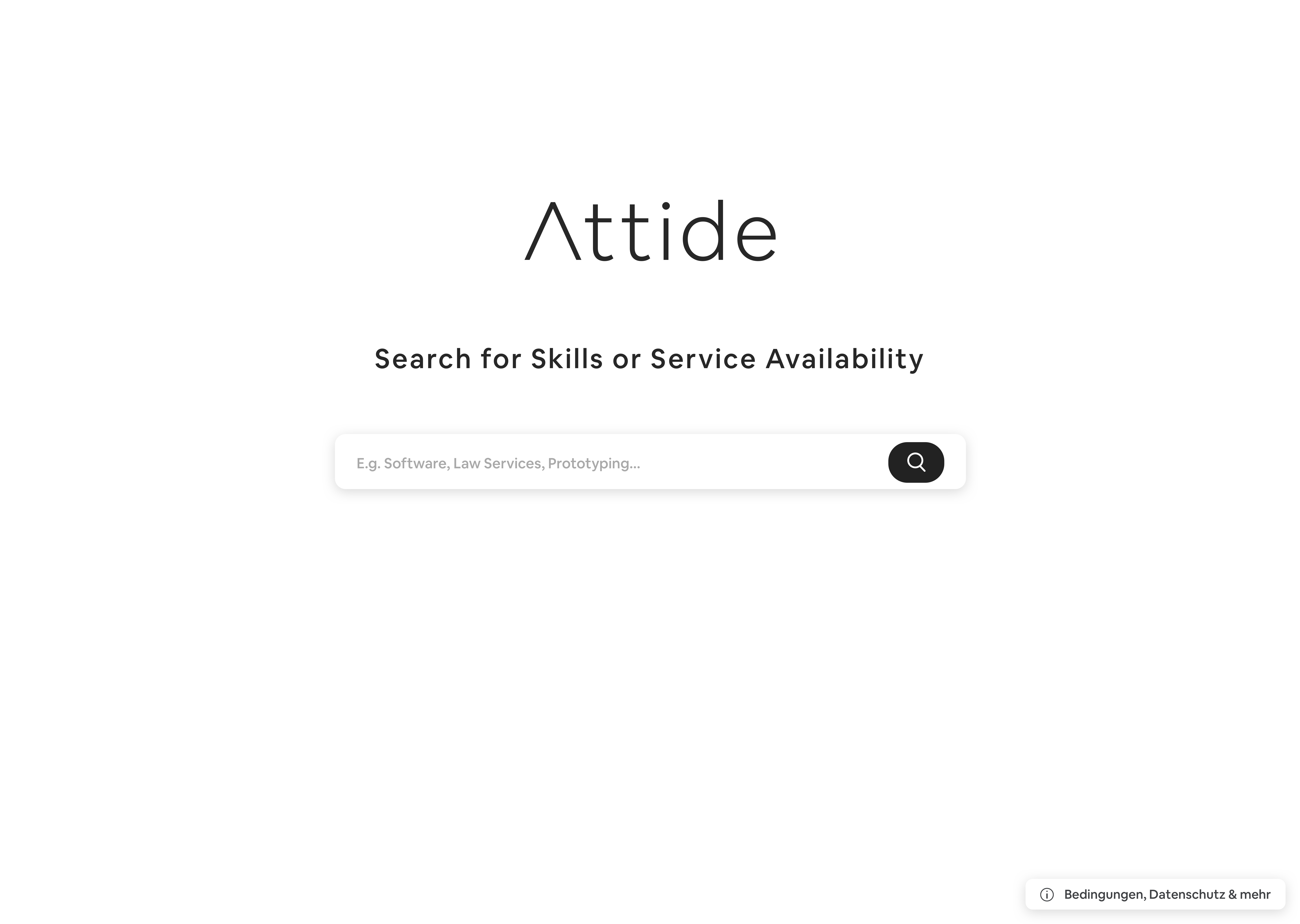
At about 21, I designed Attide as a search for skills and services that could turn a project brief into a team. In retrospect, it tackled part of the matching problem Mercor later approached with AI. The intelligence to understand briefs and fit people to work was out of reach for me then, leaving the idea caught in a marketplace’s supply-and-demand loop.
I built an early Cruisr prototype for the whole cruise journey. Access to travel and booking data through gatekeepers like Amadeus and Sabre made taking it further impossible with my resources then. That experience led me to the idea for REM within Global Dynamics.

I built Smoeki at 20: a mobile feed where supporting a brand’s campaign gave people a chance to receive a product or experience. German gambling authorities later shut the project down.
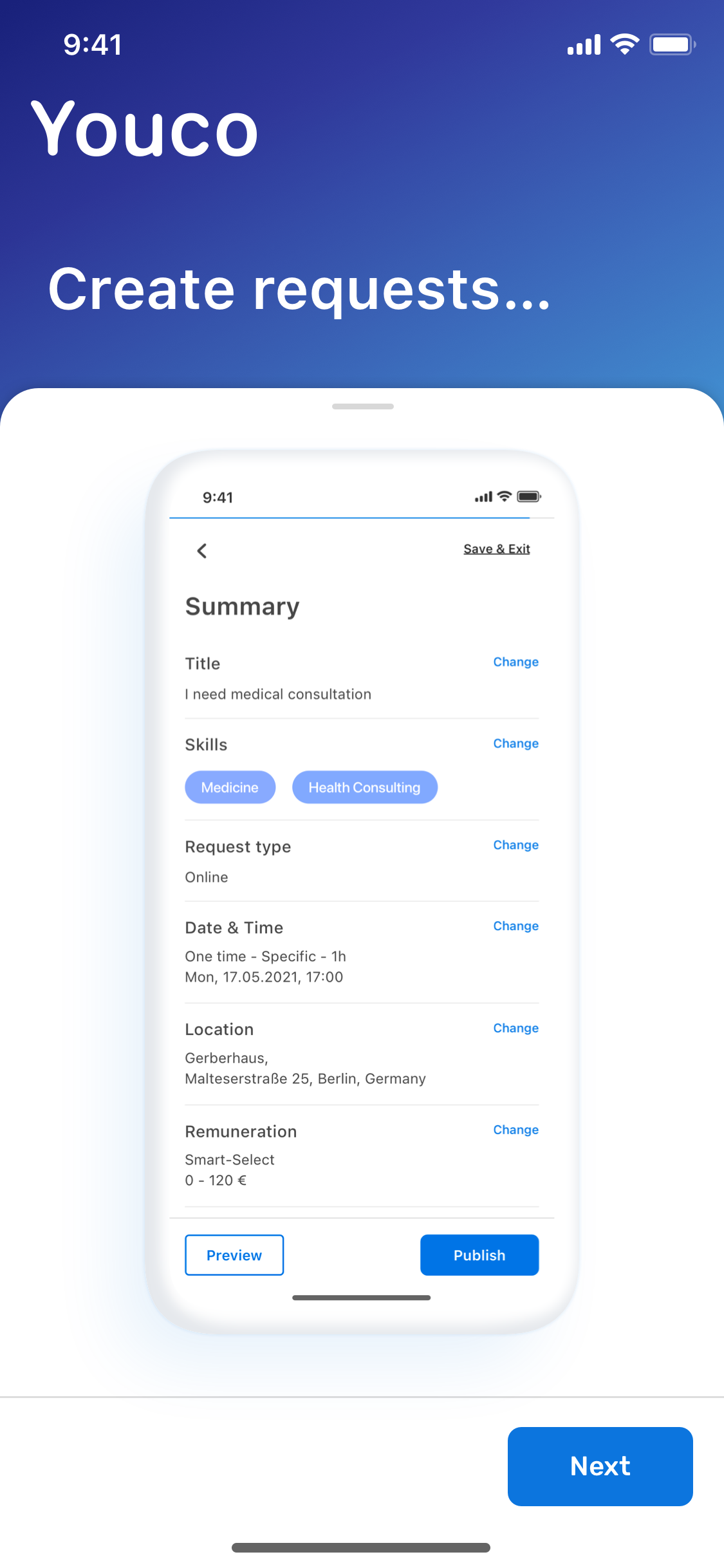
A peer-to-peer app for local help: dog walking, tutoring, shopping or a task someone nearby needed done. Today’s Youco prototype returns to that local-help core as a new product and brand.
Past work · A creator-fintech chapter
That was our ambition at Superjoi. Creators could put forward new work; fans could fund it, shape it and share in its success.
I co-founded Superjoi with Chris Knight and Piotr Wolański.
A stock market for content.
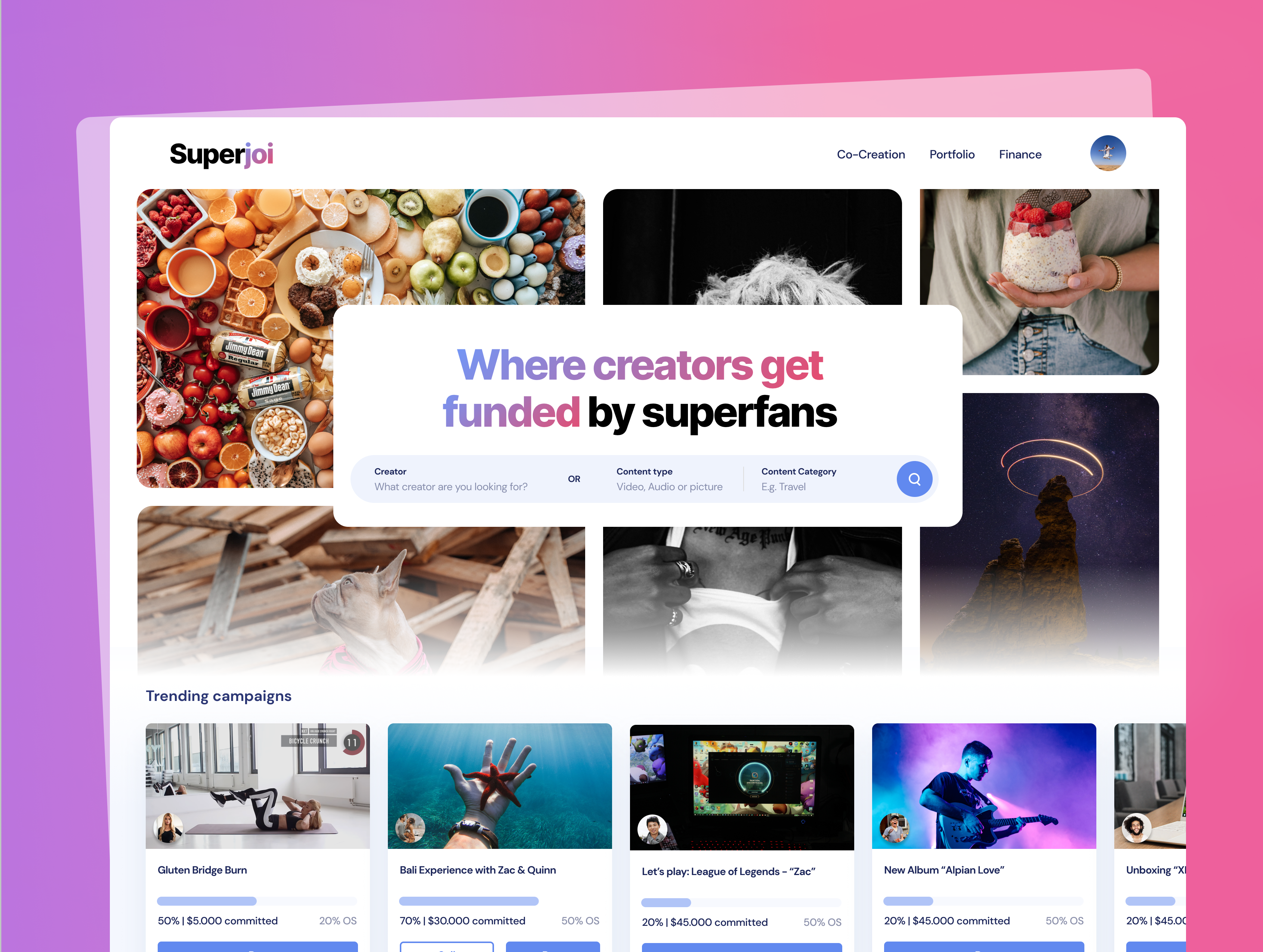
Creators able to unfold more of their potential, powered by the people who cared most about their work.
Get every creator funded by their superfans.
The product idea
Creators proposed projects. Fans could fund them, vote, contribute ideas and agree how future campaign revenue would be shared.
A profile, a proposed project and a route to fund the next piece of work.
Funding, ideas, voting, co-creation and rewards around what should be made next.
Payments, revenue sharing and distribution across a creator’s existing social channels.
Contemporary coverage
FinTech Futures described plans for creator funding, revenue sharing, payments, analytics and connected social channels.
FinTech Futures on SuperjoiBusiness Insider reported a platform where creators could propose projects, fans could vote and fund them, and both sides could agree how future campaign revenue would be shared.
Business Insider on SuperjoiBuilt In described creator profiles, campaigns, fan funding, ideas, co-creation and rewards inside the closed beta.
Built In Los Angeles on SuperjoiWhat stayed
I came away convinced that ownership, governance and trust belong inside the product. I carried those questions into Anyjoi and Blitzhype.